Featured Smart Camera & Audio Eyewear Catalog
Direct Factory Supply for Global Importers, Distributors, and Private Label Brands
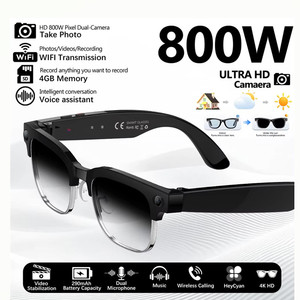
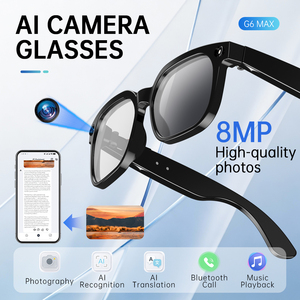
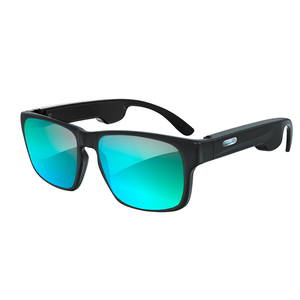

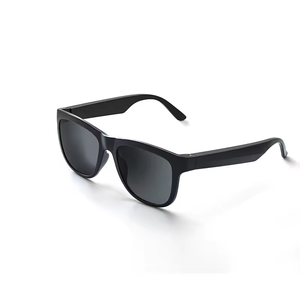
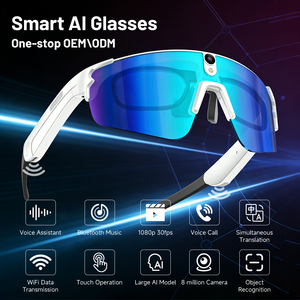

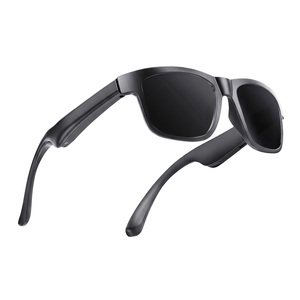
Industrial Excellence: Shenzhen Ennava Technology Sourcing & OEM Blueprint
In the rapidly evolving wearable hardware sector, selecting a qualified camera glasses factory requires evaluating far more than raw unit prices. Modern smart eyewear operates at the complex intersection of high-density SMT PCB engineering, miniaturized optics, thermal dissipation management, dynamic audio acoustic design, and ergonomics. As a dedicated leader in smart eyewear development based in Longgang District, Shenzhen, Shenzhen Ennava Technology Co., Ltd. provides a vertically integrated manufacturing infrastructure engineered to mitigate risk for international importers, brand owners, and cross-border e-commerce distributors.
Unlike generic consumer electronics assemblers, our production setup is strictly optimized for micro-optics and audio frame integration. Our manufacturing system incorporates dust-free cleanrooms for optical module lens mounting, high-precision automated surface mount technology (SMT) lines for ultra-compact mainboards, and automated spectrum calibration tools to verify sensor optical fidelity under varying ambient lighting conditions.
Core Operational & Manufacturing Advantages
- Full-Process In-House R&D & Prototyping: We maintain a turnkey engineering team specializing in industrial design (ID), mechanical structure development (MD), embedded firmware architecture, and optical alignment. Custom OEM sample cycles are executed within 7 to 10 working days.
- Advanced Multi-Stage Quality Assurance (QA): Every camera glasses batch undergoes stringent functional testing, including 100% optical resolution checks, dual-microphone beamforming acoustic validation, thermal dissipation mapping, RF Bluetooth antenna testing, and IP65–IP68 ingress protection benchmarking.
- Scalable Supply Chain Infrastructure: Strategic partnerships with top-tier chip manufacturers (Qualcomm, Bestechnic, Nordic) ensure component stability, minimizing lead times even during seasonal peaks in consumer electronics demand.
- Global Certification & Regulatory Compliance: Complete assistance with market-entry documentation including CE, FCC, RoHS, REACH, UN38.3 battery transport standards, and regional WEEE compliance files.
Information Gain Insight for Procurement Directors
When sourcing camera glasses, optical axis tilt and thermal throttling are the primary causes of consumer returns. Ennava integrates custom micro-copper heat spreaders combined with precise CNC frame alignment jigs to eliminate video frame dropping caused by IC overheating during continuous 4K or 1080p recording sessions.
Industry Evolution & Technical Horizons (2026–2030)
The global smart wearable eyewear market is shifting rapidly from passive audio frame accessories to active spatial capturing devices and ambient AI assistants. B2B buyers seeking long-term competitive differentiation must align their product roadmaps with key emerging technical paradigms:
1. AI-Powered On-Device Edge Compute & Real-Time Multimodal Translation
The convergence of low-power NPU hardware with Large Language Models (LLMs) allows modern camera glasses to capture real-time visual inputs and process OCR translation, object recognition, and voice transcription natively or via low-latency cloud bridges. Devices like our Dual AI Engine Smart Glasses leverage multi-microphone arrays to isolate voice signals in noisy environments, rendering real-time speech translation into open-ear speakers with latency figures below 400 milliseconds.
2. Advanced Sensor Integration & Ultra-Compact Optical Formats
Camera modules integrated into spectacle temples have transitioned from bulky 720p/1080p sub-assemblies to ultra-miniaturized 8MP and native 4K sensor packages equipped with Electronic Image Stabilization (EIS). Current optical engineering trends focus on wide dynamic range (WDR) sensors capable of handling rapid light transitions—such as cycling from direct sun into shaded forested roads—without blowing out high-light highlights.
3. Electrochromic & Photochromic Smart Tint Lenses
Future-proof inventory strategies increasingly favor hybrid optical solutions. Integrating electronic tint-shifting electrochromic lenses allows users to adjust light transmission (VLT) dynamically via temple touch controls or automated ambient light sensors. Combining photochromic UV400 protection with wireless audio and high-resolution video recording transforms smart eyewear from a niche tech gadget into an indispensable all-day prescription or sports frame.
4. Open-Ear Acoustic Dipoles & Directional Audio Isolation
Consumer dissatisfaction with early audio glasses stemmed primarily from sound leakage. Modern hardware architectures utilize reverse-phase acoustic dipole configurations. By projecting inverted sound waves outward while channeling focused audio toward the user’s ear canal, sound leakage is reduced by up to 85% at typical listening volumes, preserving privacy during phone calls and AI assistant interactions.
Strategic Procurement Framework: B2B Hardware Evaluation Matrix
To assist procurement teams, component buyers, and product managers in evaluating camera glasses hardware specifications against target end-user applications, our engineering team has constructed the technical baseline comparison matrix below:
| Hardware Dimension | Commercial Grade Baseline | Industrial / Enterprise Grade | Ennava Manufacturing Benchmark |
|---|---|---|---|
| Camera Module & ISP | 1080P @ 30fps / 2MP–5MP Fixed Focus | 4K UHD @ 30fps / 8MP–13MP EIS | 8MP Ultra-Wide WDR Lens with Native Hardware EIS |
| Video Codec & Wireless | MJPEG / Bluetooth 5.0 (Slow Offload) | H.265 / Dual-Band WiFi 6 + BT 5.3 | H.265 High-Efficiency Wi-Fi High-Speed Media Transfer |
| Battery Capacity & Power Management | 110mAh–150mAh Single Cell (~30 min video) | 220mAh–300mAh Dual Temple Cells | 300mAh Integrated + 2000mAh Modular Charging Case |
| Frame Material & Ergonomics | Standard PC Plastics (Over 50g weight) | TR90 Memory Polymer / Titanium Hinges (<42g) | Ultra-Lightweight Swiss TR90 Frame Construction |
| Acoustic Architecture | Single Speaker / Standard Mic | Dual Dipole Open-Ear / Dual ENC Mics | Directional Acoustic Dipoles + CVC Noise Cancellation |
| Ingress Protection | Non-rated / Standard IPX4 | IP66 Waterproof & Dustproof | Certified IP66–IP68 Weather-Sealed Enclosure |
*Note: Specifications vary based on target OEM customization packages. Full custom PCB layout configurations are available upon technical request during project scoping.
Global B2B Sourcing Trends & Supply Chain Risk Mitigation
Navigating international supply chains for advanced consumer electronics requires balancing rapid time-to-market with strict product compliance. B2B buyers who successfully scale smart eyewear brands adhere to three critical operational practices:
1. Modular Private Labeling vs. Fully Custom ODM Tooling
For mid-sized distributors and regional retail brands, investing $50,000 to $150,000 in custom injection mold tooling creates high entry barriers. Ennava mitigates this financial friction by offering modular private labeling. Importers can utilize our field-tested, pre-certified hardware frame platforms while customizing exterior finishes (matte black, tortoise, high-gloss UV coating), temple laser engravings, branded startup splash screens, customized packaging, and localized companion software applications.
2. Data Privacy & Visual Recording Compliance
Global regulations regarding wearable video capture—such as EU GDPR requirements—mandate clear visual indicators during active recording. Reliable exporters ensure that camera glasses include integrated, non-bypassable front-facing LED tally indicators that illuminate whenever the video sensor captures media. Ensuring your OEM partner designs hardware around these privacy parameters prevents customs seizures and retail distribution blocks in strict jurisdictions.
3. Total Cost of Ownership (TCO) & Yield Economics
A low initial unit quote can quickly prove costly if defective rates exceed 1%. Hardware returns on smart eyewear stem predominantly from flex-cable degradation caused by temple folding over extended periods. Ennava utilizes custom-engineered 10,000-cycle reinforced spring hinges and shielded flexible printed circuits (FPC) spanning frame junctions, keeping return rates consistently under 0.5%.
B2B Smart Camera Glasses Procurement FAQ
Detailed answers to key technical, logistical, and commercial inquiries routinely submitted by global wholesale buyers and purchasing managers.
Which B2B cooperation models does Shenzhen Ennava offer for smart glasses buyers?
1. Wholesale Supply: Ready-to-ship inventory of standard models with low Minimum Order Quantities (MOQs).
2. OEM Development: Structural, electrical, and firmware customization using existing tooling.
3. ODM Full-Custom Engineering: Turnkey ground-up design, from industrial design to custom PCB prototyping and mass production tooling.
4. Private Label Branding: Custom logo laser etching, specialized colorways, bespoke retail packaging, and customized user documentation.
What is the standard turnaround time for customized OEM smart glasses samples?
How do camera glasses offload high-resolution 4K or 1080p video files to mobile devices?
What international certifications are available to support global customs clearance?
Can prescription optical lenses (Rx) be fitted into your smart camera glasses frames?
What details should be included in a formal RFP/RFQ inquiry to receive an accurate quote?
• Target sales market (US, EU, LATAM, APAC)
• Required product category (e.g., 8MP Camera, Real-Time Translation, Electronic Tint)
• Estimated initial order quantity & annual volume forecast
• Required customization scope (Logo, packaging, frame color, software localization)
• Target project launch deadline
Partner with a Leading Smart Eyewear Exporter
Accelerate your market entry with field-tested hardware platforms, fast sample cycles, and complete OEM/ODM engineering support. Request a direct factory quote or request product catalogs today.
Get a Quote