Flagship Smart Open Ear Audio & AI Eyewear Series
Direct from Shenzhen Ennava Technology Co., Ltd. — Engineered for Brand Distributors, Wholesalers, and Retail Innovation.
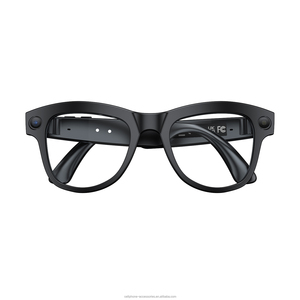
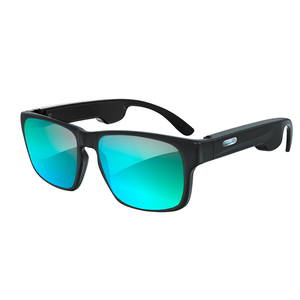
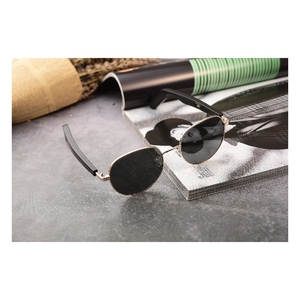
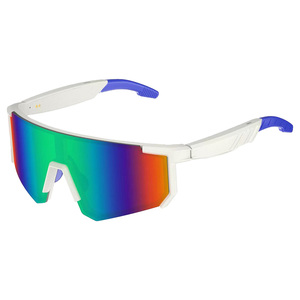
Why Global Tier-1 Brands Choose Ennava Technology
Direct manufacturing execution backed by rigorous acoustic validation, regulatory compliance, and scalable OEM/ODM infrastructure in Shenzhen.
Direct OEM/ODM Manufacturing
Operating out of Longgang District, Shenzhen, our vertically integrated facility handles PCB SMT assembly, acoustic tuning, injection molding, and optical lens coating in-house.
Directional Audio Acoustics
Our proprietary dipole acoustic cavity reduces sound leakage by up to 88% while directing crystal-clear high-fidelity sound straight into the ear canal without blocking ambient situational awareness.
Turnkey Private Label Customization
From custom frame colors, laser-engraved logos, TAC polarized or electrochromic tint lenses, to retail gift packaging and localized multilingual user manuals in 7-10 days.
Technical Deep-Dive: The Engineering Architecture of Modern Open-Ear Smart Eyewear
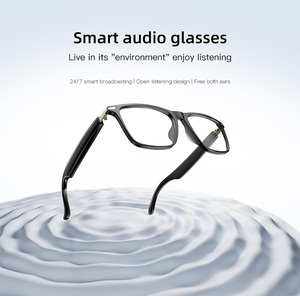
As the wearable tech landscape transitions from bulky ear-inserted TWS (True Wireless Stereo) earbuds toward non-intrusive audio-visual devices, open ear sunglasses have emerged as the primary form factor for next-generation smart wearables. Unlike traditional headphones that physically seal the ear canal—causing listening fatigue, moisture buildup, and loss of ambient sound recognition—open ear audio eyewear utilizes specialized acoustic wave-shaping to deliver high-resolution audio while maintaining total perceptual awareness of surrounding environments.
B2B Procurement Insight: The smart audio glasses market is projected to grow at a CAGR of 27.4% from 2024 to 2030. Sourcing managers must evaluate suppliers based on acoustic phase-cancellation technology, battery safety certifications (UN38.3, MSDS), and optical quality standards (ANSI Z80.3 & EN ISO 12312-1) rather than surface cosmetic aesthetics alone.
1. Directional Air Conduction vs. Bone Conduction Technology
When evaluating open ear sunglasses manufacturing, purchasing officers frequently compare Bone Conduction Transducers against Directional Micro-Speaker Systems (Air Conduction). Understanding the structural differences is crucial for brand positioning:
- Bone Conduction Transducers: Transmit kinetic sound vibrations directly through the temporal bone to the inner ear cochlea. While ideal for specialized hearing-aid devices or underwater applications, bone conduction often introduces tactile facial vibrations at higher volumes and lacks deep bass resonance due to mechanical dispersion limits.
- Directional Air Conduction (Ennava Waveguide System): Integrates dual dynamic micro-drivers embedded inside the temple arms paired with reverse-phase acoustic ports. By emitting counter-phase sound waves outside the cavity, external acoustic spill is effectively neutralized, delivering a natural frequency curve (20Hz–20kHz) with minimal sound leakage at normal listening distances.
2. Electrochromic (EC) Tinting and TAC Optical Polarization
A major technical obstacle in early smart sunglasses was rigid lens tinting that rendered the eyewear impractical for indoor transition or variable weather conditions. Ennava’s advanced smart eyewear series integrates electrochromic (EC) liquid crystal film layers alongside Premium TAC (Triacetate Cellulose) UV400 polarized optics.
With an electrochromic system, low-voltage electronic pulses dynamically alter light transmittance from Category 1 (75% light pass-through for overcast/indoor use) to Category 3 (10% light pass-through for harsh midday sun glare) in less than 0.1 seconds. This allows users to wear one single pair of smart sunglasses seamlessly across cycling, outdoor sports, office environments, and nighttime driving.
3. Low-Power AI SoC Integration & Dual MEMS Noise Cancellation
Our 2025/2026 product lines utilize ultra-low-power Bluetooth 5.3 / 5.4 System-on-Chips (SoCs) such as Qualcomm and BES platforms paired with dual MEMS directional microphone arrays. Embedded hardware-level Clear Voice Capture (CVC 8.0) and AI beamforming algorithms suppress wind noise up to 35km/h during cycling, ensuring crystal-clear hands-free calling, real-time voice translation, and instant AI voice assistant triggering (Siri, Google Assistant, ChatGPT voice interfaces).
B2B Category Procurement Comparison Matrix
To assist global buyers, importers, and brand product directors in selecting the ideal platform, the table below breaks down technical parameters across our primary product categories:
| Product Category | Primary Architecture | Battery Capacity & Runtime | Optical / Lens Spec | Target Retail Channel |
|---|---|---|---|---|
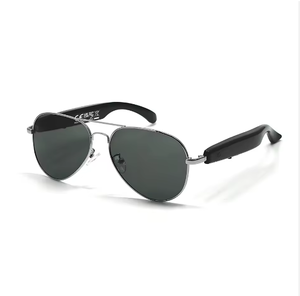
| Directional Audio Sunglasses | Dual Open-Ear Micro Speakers + BT 5.3 | 110mAh–160mAh (5-8 Hours Playback) | TAC UV400 Polarized / Anti-Blue Light | Fashion Retailing, Consumer Electronics, Optical Chains |
| Bone Conduction Eyewear | Temporal Mechanical Transducers + BT 5.2 | 180mAh (4-6 Hours Playback) | Impact-Resistant PC / UV400 | Medical/Hearing Assist, Seniors, Tactical Outdoor |
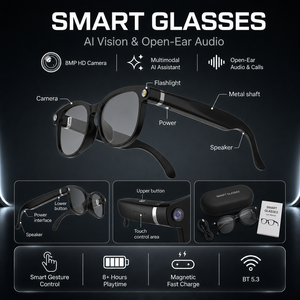
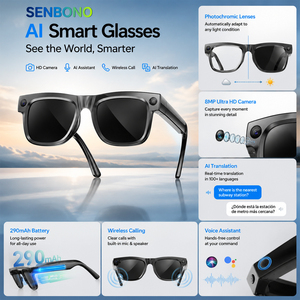
| AI Camera & Translation Eyewear | 5MP/8MP CMOS Sensor + WiFi + BT 5.4 + AI SoC | 220mAh–300mAh (+ 2000mAh Power Case) | Customized Optical / Photochromic | Content Creators, Travel Retail, Enterprise Tech Brands |
| Smart Cycling Audio Glasses | Sweatproof IPX65 + Directional Waveguide | 110mAh–260mAh (6-10 Hours Playback) | Revo Mirror Polarized / Photochromic | Sporting Goods Stores, Cycling Gear, Outdoor Brands |
| Electrochromic Tint Glasses | EC Liquid Crystal Tint Control + BT Audio | 150mAh (Auto-tinting + 6 Hrs Audio) | Electronic Dynamic Tint Lenses | High-End Driving Eyewear, Luxury Wearable Brands |
Future Purchasing Trends in Open-Ear Smart Eyewear (2025–2030)
As an industry-leading OEM/ODM manufacturer, Shenzhen Ennava Technology monitors shifting consumer buying behaviors and technological convergence. Key sourcing trends shaping contract manufacturing include:
- On-Device Large Language Model (LLM) Translation: Rather than relying solely on smartphone apps, smart glasses are incorporating onboard neural processing units (NPUs) to perform offline real-time bidirectional translation in over 30 languages with ultra-low latency.
- Modular Frame & Temple Swapping: Retailing brands are demanding modular quick-release hinge systems. This design allows consumers to swap temple arms containing electronic components across multiple front optical frame designs (Wayfarer, Aviator, Round, Sport Shield) without needing separate electronic SKUs.
- Ultra-Lightweight Ergonomics (< 38g Total Mass): Early smart glasses weighed upwards of 55 grams, causing nasal bridge pressure during extended wear. Advanced TR90 memory nylon materials and custom high-density lithium polymer micro-batteries now enable full-featured smart sunglasses to weigh under 38 grams—identical to conventional designer sunglasses.
- Environmentally Conscious Eco-Materials: Global brand buyers in Europe and North America increasingly demand bio-based acetate, recycled TR90 resin, and plastic-free retail gift packaging compliant with EU EPR and RoHS directives.
Rigorous Quality Control & International Compliance
Ensuring absolute product consistency, zero-defect shipping, and smooth global customs clearance for high-volume B2B orders.
Full Electromagnetic Compliance
All production models undergo strict testing to receive CE, FCC, RoHS, TELEC, and NCC certifications, facilitating seamless customs entry across the EU, USA, Japan, and Australia.
Battery & Kinetic Reliability
Pure cobalt lithium cells fitted with Seiko protection ICs are subjected to UN38.3 vibration, drop tests, 500-cycle aging checks, and IPX5/IPX65 water-ingress chamber testing.
End-to-End Traceability
Barcode-tracked SMT component assembly ensures every single pair of smart glasses is traceable from raw chip placement down to final box sealing, keeping RMA rates under 0.3%.
Smart Eyewear Sourcing FAQ
Direct technical and operational answers to common procurement questions from global buyers.
Partner with a Leading Open Ear Sunglasses Manufacturer
Scale your brand with industry-proven smart eyewear engineering. Request full catalog specifications, OEM quotation breakdowns, or custom sample prototypes today.
Get a Quote