Flagship OEM/ODM Smart Eyewear Portfolio
Explore our engineered electrochromic, bone conduction, AI translation, and camera-integrated smart glasses manufactured for global distributors and retail brands.
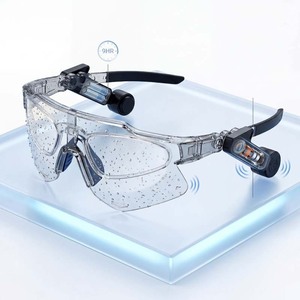
Bone Conduction Smart Glasses BT5.3 Open Ear Audio IPX5 Waterproof 9hrs Playback Anti UV Cycling Eyewear Sport Running Music
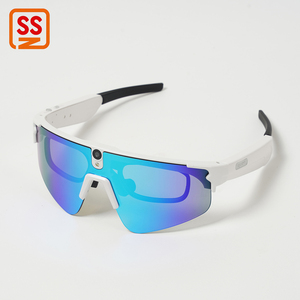
Innovative Tech Eyewear 8 Million Camera Video Music Playback Noise Reduction Smart Glasses with Camera
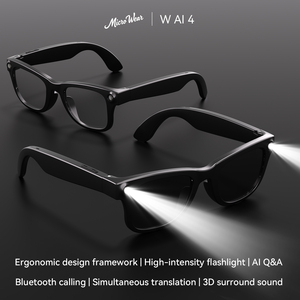
W94 Smart Glasses Real-time Translation 3D Surround Stereo Sound AI Intelligent Q&A BT Connection Flashlight IPX-5 Waterproof
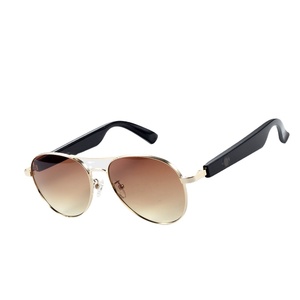
Original Manufacturer Wholesale Price High-Quality Smart Glasses Smart Audio Glasses With Bluetooth Functionality
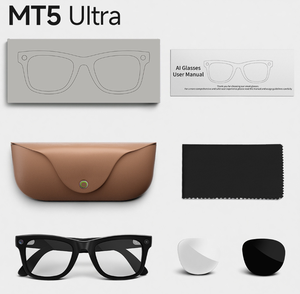
MT5 Ultra AI Smart Glasses with 8MP HD Camera Video Recording Smart Eyewear Real-time Translation Bluetooth Audio Sunglasses

GT50 Customizable AI Smart Sunglasses New for Glasses for Music Listening and Call Making
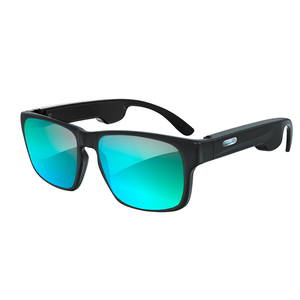
High Sound Quality Wireless Speaker Sunglasses Smart Bone Conduction Audio Sunglasses for Elderly Hearing-aid
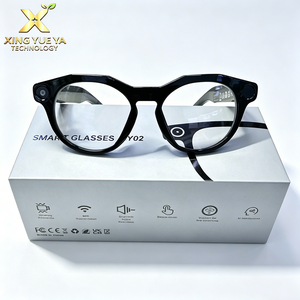
CY02 AI Smart Glasses 13MP Dual Camera 1080P Video Real-time Translation WiFi6 Noise Cancelling Music Calls Business Sunglasses
Engineering Next-Generation Electrochromic Tinting & Smart Eyewear Systems
The consumer wearables market is undergoing a structural paradigm shift. Traditional photochromic lenses (which rely on chemical UV excitation and suffer from slow, ambient-temperature-dependent tint transitions) are rapidly being superseded by active electrochromic (EC) and liquid crystal (LC) dynamic tint control. As a primary OEM/ODM manufacturer headquartered in Shenzhen, China, Shenzhen Ennava Technology Co., Ltd. stands at the nexus of micro-optical engineering, low-power embedded electronics, and industrial frame design.
1. Comparative Physics: Electrochromic (EC) vs. Photochromic vs. Guest-Host Liquid Crystal (GH-LC) Lenses
For commercial procurement officers and product managers, selecting the core light-modulation architecture dictates both end-user satisfaction and unit bill-of-materials (BOM). Below is an architectural breakdown of the three leading tint-shifting technologies integrated into modern smart sunglasses:
| Performance Metric | Electrochromic Thin-Film (EC) | Guest-Host Liquid Crystal (GH-LC) | Traditional Photochromic (Silver Halide) |
|---|---|---|---|
| Transition Speed (Dark to Light) | 1.0 to 3.0 Seconds | < 100 Milliseconds | 60 to 180 Seconds (Slow) |
| Visible Light Transmission (VLT) Range | 10% — 65% Stepless | 12% — 45% Digital Stepped/Stepless | 15% — 80% Uncontrolled Ambient |
| Control Mechanism | User Touch / Ambient Sensor / Micro-voltage | Manual Touch Bar / Sensor / App Logic | Passive UV Radiation Only |
| Power Consumption | Bistable / Micro-Amperes during switch | Continuous Low Voltage (1.8V-3.3V) | 0mW (Zero Power) |
| Driving Safety (Behind Automotive Windshields) | 100% Functional | 100% Functional | Fails (UV Blocked by Glass) |
| Custom OEM Scalability | High (Flexible PET Substrates) | High (Curved Optical Resins) | Standard Mass Production |
Information Gain Insight: Solving the "Automotive UV Trap"
A major pain point in consumer optical retail is that photochromic sunglasses fail to darken inside automobiles because standard automotive glass filters out ambient UV light. Ennava’s electronic tint systems utilize internal micro-voltage drivers triggered via frame-embedded capacitive touch panels or photo-diode light sensors. This guarantees instant tint adjustment whether driving, moving into direct sunlight, or entering covered tunnels—delivering genuine safety value to end consumers.
2. Embedded Hardware Architecture: Merging Electrochromics with Bluetooth 5.3 & AI Microcontrollers
Custom OEM smart eyewear is no longer just optical frame assembly; it is sophisticated micro-electronics packaging. Our R&D team specializes in ultra-low profile printed circuit board assemblies (PCBAs) designed to fit tightly within standard 4.5mm temple arms without compromising ergonomic weight balance.
Directional Open-Ear Audio
Dual micro-speakers engineered with reverse-soundwave leak suppression technology. Audio is targeted directly into the user's ear canal while keeping ambient surroundings audible for cycling and commuting safety.
IPX5 to IPX7 Sealing
Precision ultrasonic frame sealing and nano-phobic coating over internal PCBAs protect against corrosive sweat during intensive athletics, heavy rainfall, and outdoor sports.
AI Real-Time Engine
Integrated BLE 5.3 chipsets seamlessly pair with dedicated iOS/Android translation apps, enabling low-latency, two-way multi-language voice interpretation directly through the glasses.
Global Sourcing & Procurement Market Trends (2026–2030)
As buyers for major consumer electronics brands, sporting goods chains, and prescription eyewear networks plan their multi-year inventory strategies, three key trends are shaping smart tint eyewear manufacturing:
- Convergence of Prescription (Rx) Optics and Electrochromics: The market is shifting away from non-corrective plano lenses. Advanced OEM suppliers must offer custom RX edging (single vision and progressive) bonded directly to EC flexible films.
- Ultra-Low Power Micro-Sensors with Autonomous Tint Matching: Future models rely on micro light-sensor arrays that read lux levels every 50ms, dynamically adjusting tint level step-by-step to maintain optimal eye comfort without manual intervention.
- Modular Frame Tooling for Rapid Private Label Turnover: Retailers demand standardized, interchangeable electronic temples that click onto customized front frame designs (acetate, TR90, or titanium alloy), drastically reducing tooling costs and speed-to-market.
Why Partner with Shenzhen Ennava Technology?
Shenzhen Ennava Technology Co., Ltd. operates a vertically integrated production facility in Longgang District, Shenzhen. By combining optical injection molding, SMT surface mount lines, dust-free acoustic assembly cleanrooms, and stringent quality assurance, we eliminate supply chain fragmentation for overseas importers.
Full-Process OEM / ODM Engineering
From initial ID industrial design, 3D rapid prototyping, and custom mold construction to PCB schematic layout and custom mobile application development, Ennava provides end-to-end engineering support. Customized samples are typically delivered in just 7 to 10 working days.
Rigorous Multi-Stage Quality Assurance
Every production batch undergoes strict reliability testing: 10,000-cycle temple hinge flex fatigue testing, thermal shock chambers (-20°C to 70°C), salt spray corrosion tests for electronic contacts, drop-ball impact resistance, and 100% acoustic curve calibration.
B2B Sourcing FAQ: Custom OEM Electronic Tint Glasses
Answers to critical questions asked by global procurement teams, distributors, and brand managers.
What is the Minimum Order Quantity (MOQ) for custom OEM orders?
For standard wholesale ready-to-ship models, our MOQ starts at just 50 to 100 units. For custom private label branding (custom logo laser-engraving, custom packaging box, customized user manual), the typical MOQ is 500 units. Full ODM projects involving unique frame molds and custom PCBA layouts start at 1,000 to 2,000 units.
How fast do your electronic tint lenses change color?
Our Guest-Host Liquid Crystal (GH-LC) optical lenses transition between light and dark states in under 0.1 seconds (100 milliseconds). Our Electrochromic thin-film (EC) models transition within 1.0 to 3.0 seconds. Both options are drastically faster than traditional photochromic lenses, which require up to 3 minutes to clear up indoors.
Are your smart electronic tint glasses certified for import into Europe and North America?
Yes. All Ennava smart glasses are engineered to meet international safety and electromagnetic standards. Depending on the target destination, we provide full CE, FCC, RoHS, REACH, and UN38.3 (battery transportation safety) test reports.
Can prescription (Rx) lenses be fitted into your electronic tint frames?
Yes. We offer specialized frame designs with removable inner prescription optical inserts, as well as custom OEM manufacturing where prescription lenses are directly bonded with electrochromic film layers based on client optical specifications.
What is the average lead time for customized sample production?
Standard customized samples featuring silk-screened logos, custom frame colors (TR90 pantone matching), and custom packaging are completed within 7 to 10 working days. Rapid prototyping for custom structural designs takes approximately 15 to 20 days.
Launch Your OEM Smart Glasses Project Today
Talk directly with our senior optical engineers and B2B project directors. Request sample units, technical spec sheets, and factory-direct wholesale pricing.
Inquire Now