Featured OEM & ODM AI Powered Glasses Platforms
Explore our mass-production-ready hardware platforms, fully customizable for private labeling, custom optics, specialized AI firmware, and international market deployment.
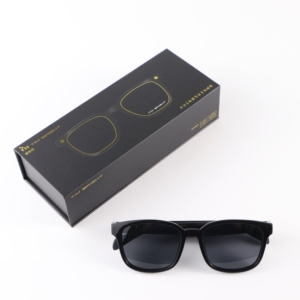
Wholesale Smart Audio Glasses AI Translator Open Ear 130+ Languages No Camera for Meeting Travel
Inquire Now
Premium AI Smart Glasses 8-10H Music Ergonomic Design Extended Playback for Video Calls Easy Operation Custom Packaging for Work
Inquire Now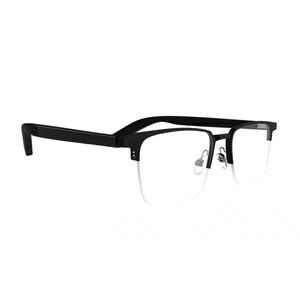
2026 Latest Men Touch WiFi Audio Glasses Intelligent Translation Wireless BT Calling Camera Video ChatGPT AI Smart Glasses
Inquire Now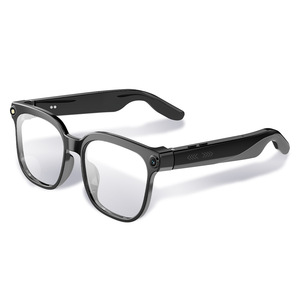
zl Glasses Factory Brand OEM M02 Smart Glasses 800W Pixel HD Camera AI Photo Recognition Magnetic Charging 290mAh Battery
Inquire Now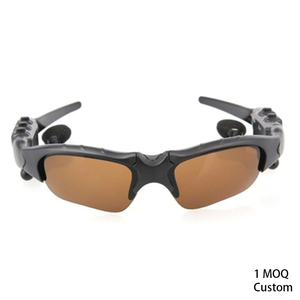
Outdoor Portable Wireless Headset Glasses, Sports Polarized MP3 Sunglasses, UV Protection, Custom Logo, 1pc Min
Inquire Now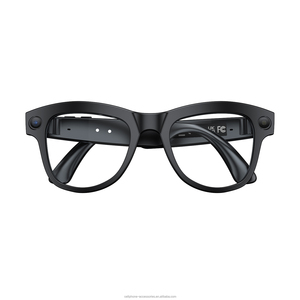
All in One Audio Video Glasses 5MP Photo Dual Speakers Real-Time AI Translation Image Recognition Smart Translation Glasses
Inquire Now
Mellume OEM ODM Acetate Sunglasses Acetate Black Sunglasses Custom Logo Private Label Eyewear Factory Supplier for Men Women
Inquire Now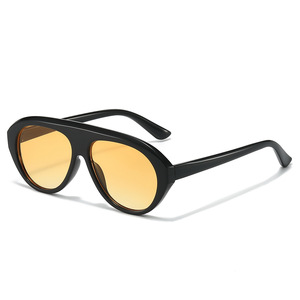
Custom Private Label Sunglasses XY7135 Retro Eyewear Factory Tortoise Frame UV400 Eyewear
Inquire NowThe Paradigm Shift in Smart Eyewear: OEM Manufacturing & Procurement Landscape
The smart eyewear sector has reached a critical inflection point. No longer confined to basic Bluetooth audio playback or niche tech novelty, modern smart glasses represent the intersection of high-density edge computing, multimodal artificial intelligence (LLM and VLM architectures), micro-optics, and luxury eyewear craftsmanship. For global brand owners, consumer electronics importers, telecom operators, and specialized distributors, partnering with an established Custom OEM AI Powered Glasses Manufacturer is no longer merely a supply chain decision—it is a core product strategy.
As natural language processing (NLP) model latency drops below 200 milliseconds and computer vision modules shrink to sub-gram form factors, wearable human-computer interaction (HCI) is migrating from smartphones to head-worn platforms. The demand for hands-free AI interaction, ambient situational intelligence, real-time audio translation, and immersive optical capture requires sophisticated engineering across electrical engineering, optical alignment, acoustic beamforming, and ergonomics.
Next-Generation Sourcing & Future Industry Trends (2026–2030)
To maintain competitive margins and market relevance, procurement managers must align their product roadmaps with key technological vector changes dominating AI smart eyewear production.
Multimodal On-Device & Cloud AI Synergy
Future AI smart glasses leverage hybrid compute topologies. Ultra-low-power edge NPU silicon processes continuous voice keyphrases and visual token filtering locally, offloading complex tasks to LLM backends (such as ChatGPT-4o, Claude 3.5, or Gemini Live API). OEM manufacturers must offer open SDKs and customizable API middleware to allow seamless cloud integration.
Electrochromic Tinting & Advanced Micro-Waveguides
Static UV400 or polarized lenses are evolving toward dynamic electrochromic switchable tinting (EC-lenses) that auto-adjust transmittance within milliseconds based on ambient lux levels. Concurrently, diffractive optical waveguides with Micro-OLED projection engines are standardizing, transforming standard optical frames into lightweight heads-up displays (HUD).
Directional Acoustic Leakage Control
Privacy and call discretion remain top enterprise procurement requirements. Modern smart audio eyewear incorporates dual-micro-speaker reverse-phase acoustic dipoles and directional sound ducting. This architecture cancels sound propagation beyond a 30-centimeter radius, ensuring complete conversation confidentiality in corporate and public settings.
High-Density Curved Anode Battery Architecture
Frame temple aesthetic constraints historically limited battery capacity. Advanced OEM suppliers now utilize micro-curved high-density lithium-cobalt oxide (LCO) batteries engineered directly into the temple stems. Combined with low-power Bluetooth 5.4 SoCs, operational playback now easily reaches 8 to 12 hours without compromising frame thinness.
Eco-Acetate & Ultra-Light Titanium Frames
B2B buyers are demanding luxury consumer-grade material options. Traditional injection-molded plastics are giving way to bio-degradable cellulose acetate, forged carbon fiber, and aviation-grade Beta Titanium memory hinges, bridging the gap between high-end optometry and advanced consumer electronics.
Mandatory Global Compliance & Privacy Hardware Seals
With EU EPR, FCC Part 15, CE RED, and global biometric privacy laws intensifying, hardware suppliers must build integrated physical LED tally indicators for camera-equipped models and provide comprehensive environmental (RoHS/REACH) and SAR safety documentation for global customs smooth clearance.
Technical Evaluation Matrix for OEM AI Smart Glasses Selection
A detailed technical comparison matrix designed for hardware procurement officers, engineering consultants, and brand strategists when evaluating OEM hardware options.
| Architecture Feature | Entry-Level Audio/Translation | Advanced AI Camera & Video | Enterprise HUD Waveguide |
|---|---|---|---|
| Target Core Processor | Dual-Core 32-bit RISC Audio SoC (BT 5.3/5.4) | Quad-Core ARM Cortex + Dedicated Edge NPU | Octa-Core Heterogeneous Wearable Platform |
| Primary Sensor Suite | MEMS Dual Microphone Array + 6-Axis IMU | 8MP/12MP HD Camera + Dual ENC Mics + Gyro | ToF Depth Sensor + Micro-Camera + Eye Tracking |
| AI Integration Capabilities | 130+ Language Voice Cloud Translation API | ChatGPT-4o Photo Recognition & Contextual Query | Real-time Spatial AR Overlay + Multimodal AI |
| Battery Capacity & Charging | 110mAh – 160mAh (Magnetic Pogo Pin) | 260mAh – 300mAh (+ 2000mAh Power Case) | 350mAh Fast-Charge Dual Temple Cells |
| Frame & Lens Options | TR90 / Hand-Cut Acetate / TAC Polarized | Lightweight PC / Nylon Sports / Photochromic | Titanium Alloy / Electrochromic Smart Tinting |
| Target Retail Channels | Travel Retail, Gift Outlets, Cross-Border E-Com | Consumer Tech Retail, Action Sports, Content Creators | Industrial Field Service, Telemedicine, Enterprise AR |
End-to-End Smart Eyewear Engineering & Manufacturing Supremacy
Our facility in Shenzhen bridges the gap between high-precision optical eyewear manufacturing and advanced micro-electronics assembly.
Full-Process Turnkey OEM/ODM Development
We offer total product lifecycle execution—from initial industrial design (ID) rendering, mechanical 3D stacking, and customized PCB Layout (PCBA), to custom tooling mold production, SMT mounting, firmware modification, and private-label packaging design.
Whether you require minor brand logo laser-engraving on off-the-shelf platforms or ground-up ODM development with unique frame geometry and custom AI app integration, our engineering team executes prototypes within 7 to 10 working days.
Rigorous 8-Stage Quality Assurance Pipeline
Consumer wearable devices demand immaculate reliability. Every production batch passes through an unyielding 8-tier quality control protocol inside ISO9001-certified facilities:
- Anechoic Chamber Acoustic Calibration: Verifying THD (<1%) and directional beamforming.
- RF OTA Wireless Performance: Bluetooth signal stability testing up to 15 meters clear-line-of-sight.
- Environmental Stress Testing: High temperature/humidity chamber exposure (-20°C to 65°C).
- IPX4/IPX7 Waterproof Verification: Simulated rain and sweat ingress protection tests.
- Mechanical Hinge Torsion & Drop Tests: 10,000-cycle temple flex endurance testing.
- Optical Alignment & UV Transmittance: Spectrometer verification for complete UV400 blocking.
Frequently Asked Questions for Sourcing & Purchasing Teams
Get immediate clarity on minimum order quantities, customization scopes, international certification support, and app integration procedures.
What are the Minimum Order Quantities (MOQ) for custom OEM and Private Label orders?
For ready-to-ship standard hardware models with custom logo laser engraving and customized outer packaging, our MOQ starts at just 100 units. For full OEM custom frame colors, specialized surface finishes (e.g., custom acetate patterns or rubberized coatings), or custom PCB firmware branding, the MOQ typically ranges between 500 and 1,000 units depending on the model tier.
Can we integrate our own proprietary AI backend or smartphone application?
Yes. We provide complete BLE communication protocols, API documentation, and Android/iOS SDKs for enterprise clients who wish to connect our smart glasses hardware directly into their own existing mobile apps or proprietary cloud AI systems (e.g., custom enterprise voice assistants, internal translation databases, or specialized vision recognition models).
What lead times can we expect for customized samples and mass production runs?
Customized pre-production samples (with custom logo, customized optical lenses, and printed gift boxes) are delivered in 7 to 10 working days. Mass production lead time for standard wholesale orders is approximately 15 to 20 days, while complex full-custom OEM ODM orders requiring dedicated mold tooling take 30 to 45 calendar days from golden sample sign-off.
Which international safety and regulatory certifications do your products hold?
Our smart eyewear platforms are built to satisfy global export standards. Depending on the model, we provide complete compliance documentation including CE-RED (Europe), FCC Part 15 (USA), RoHS 2.0, REACH, UN38.3 (battery air/sea transport safety), MSDS, and IEC 62133. We also assist brand owners in securing localized TELEC (Japan), Anatel (Brazil), or KC (Korea) certifications upon request.
Do you support prescription (Rx) optical lens installation for end users?
Absolutely. Our frame structures feature detachable front rim assemblies or standardized lens groove dimensions. This enables local opticians or retail buyers to swap stock demo lenses with custom prescription single-vision, progressive, blue-light blocking, or prescription polarized lenses easily without damaging the internal electronics or temple wiring.
How do you manage acoustic privacy and eliminate sound leakage in open-ear models?
Our audio platforms utilize dual cavity directional acoustic structures. Sound waves are focused directly toward the wearer's ear canal while secondary reverse-phase acoustic ports emit out-of-phase audio waves to cancel external sound bleed. This engineering ensures that audio remains rich and audible to the user while remaining virtually silent to bystanders standing less than a arm's length away.
What battery life and thermal safety protections are engineered into the frames?
Batteries are housed inside flame-retardant isolation compartments within the temples, completely isolated from direct skin contact. Integrated battery protection ICs prevent overcharging, over-discharging, thermal runaway, and short circuits. Battery life ranges from 8 hours of continuous audio playback up to 24 hours of mixed standby, supported by magnetic fast-charging Pogo pins that reach 80% charge in 30 minutes.
Ready to Build Your Custom AI Smart Eyewear Line?
Partner with a trusted, engineering-driven OEM/ODM manufacturer. Consult directly with our technical sourcing specialists to receive detailed spec sheets, request customized sample kits, or get an instant factory-direct quote.
Inquire Now