State-of-the-Art Smart Audio & AI Eyewear Catalog
Direct factory wholesale supply and custom private-label solutions manufactured in Shenzhen's tech hub.
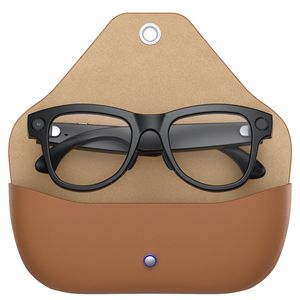
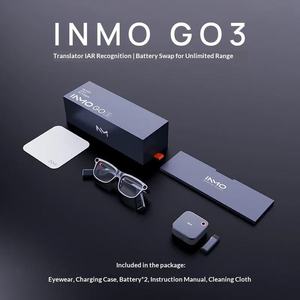
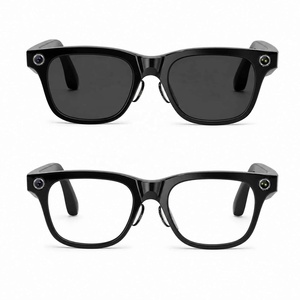
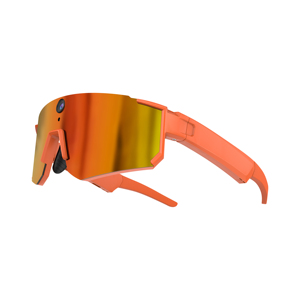
1. Strategic Overview: China's Wholesale Smart Audio Glasses Supply Chain
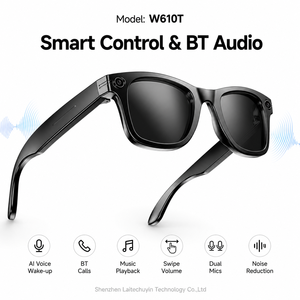
The global wearable technology sector is experiencing a paradigm shift. Traditional eyewear is converging with high-fidelity directional acoustics and artificial intelligence (AI) micro-architectures. China—specifically the Greater Bay Area electronics hub encompassing Shenzhen and Dongguan—has solidified its role as the dominant powerhouse for smart audio glasses design, tooling, assembly, and global export.
For international buyers, brands, consumer electronics importers, and regional optical distributors, sourcing smart audio glasses directly from top-tier Chinese manufacturers provides unparalleled competitive advantages in terms of unit cost efficiency, technological innovation speed, and supply chain scalability. However, navigating this complex landscape requires an authoritative understanding of factory capabilities, quality control standards, electroacoustic performance specs, and global regulatory compliance.
2. Enterprise Manufacturing Excellence: Shenzhen Ennava Technology Ecosystem
As a specialized B2B smart eyewear enterprise headquartered in Longgang District, Shenzhen, Shenzhen Ennava Technology Co., Ltd. represents the benchmark for Chinese export-oriented engineering and production integrity. Our operational infrastructure is structured specifically to resolve the core pain points experienced by international buyers: inconsistent audio calibration, fragile frame hinges, battery degradation, and delayed delivery cycles.
End-to-End OEM/ODM & Private Label Capabilities
Ennava offers comprehensive B2B cooperation models tailored to diverse commercial channels—from established optical chains to fast-growing Amazon/Shopify electronics brands:
Complete OEM/ODM Development
Full custom tooling, ID frame engineering, circuit board design (PCB/SMT), firmware customization, and custom acoustic chamber optimization.
Turnkey Private Labeling
Laser-engraved brand logos, customized gift boxes, multi-language instruction manuals, branded microfiber cleaning cloths, and custom Bluetooth pairing names.
Rigorously Tested Quality Control
Multi-stage quality assurance including IQC for component incoming verification, IPQC during SMT/assembly, dynamic audio spectrum analysis, and 100% aging tests.
Acoustic Engineering & Ergonomic Material Selection
Uncompromising quality begins with material selection. Ennava smart glasses utilize lightweight Swiss EMS TR90 memory polymers, high-grade acetate, and ultra-durable titanium alloy hinges tested for over 20,000 opening/closing cycles. Acoustics are engineered using customized micro-dynamic drivers housed within mathematically modeled resonant cavities, delivering rich bass response while maintaining an ultra-lightweight profile (often under 40g for pure audio models and under 75g for AI camera models).
3. Technological & Industry Development Trends (2025–2030)
Understanding where smart audio eyewear technology is heading allows procurement directors to future-proof their product portfolios. Based on deep market research and factory R&D roadmaps, we highlight six transformative trends shaping the smart eyewear industry over the coming five years:
A. Integration of Multimodal AI & Large Language Models (LLMs)
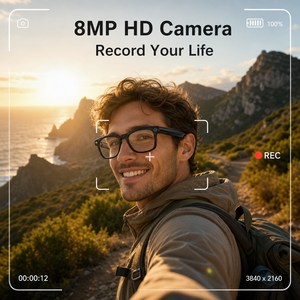
The convergence of open-ear audio glasses with cloud-based AI engines (such as OpenAI ChatGPT, Google Gemini, and Anthropic Claude) is redefining smart eyewear. Modern devices feature dedicated physical AI hotkeys or voice wake-up phrases that trigger real-time AI assistance, contextual scene identification (via integrated micro-cameras), and immediate voice-based Q&A without pulling out a smartphone.
B. Neural Real-Time Translation Algorithms
Audio smart glasses are becoming indispensable tools for international business executives, tourists, and cross-border workers. Through paired mobile applications, modern translation glasses support real-time translation across 40+ languages and 90+ accents with dual-mic ENC filtering out ambient noise during conversations.
C. Electrochromic (EC) Auto-Dimming & Interchangeable Optical Lenses
The consumer demand for all-day wearable glasses has pushed manufacturers to innovate beyond static sunglass tinting. Electrochromic smart glasses allow users to adjust lens transparency electronically—switching seamlessly from clear indoor prescription specs to dark outdoor UV400 protection within 0.1 seconds at a simple touch control.
D. Advanced Open-Ear Beamforming & Sound Leakage Reduction
Early smart glasses suffered from severe privacy issues where nearby people could overhear phone calls. Advanced phase-reverse acoustic dipole algorithms create directional sound fields that focus acoustic waves directly into the wearer's ear canal while cancelling outward-bound audio, guaranteeing absolute privacy in quiet office spaces or elevators.
Smart Audio Eyewear Technical Matrix
| Feature Category | Standard Audio Glasses | Pro AI Camera Glasses | AR Translation Eyewear |
|---|---|---|---|
| Primary Target Application | Daily Music, Hands-Free Calling, Cycling | POV Video Recording, AI Vision Q&A | Business Meetings, Travel Translation |
| Acoustic Architecture | Dual Open-Ear Micro Dynamics | Directional Quad Speakers | Bone Conduction + Air Conduction Hybrids |
| Microphone Setup | Single/Dual ENC Microphones | Dual Array Beamforming Mics | Multi-Mic Noise Canceling Matrix |
| Battery & Playback Time | 110mAh (5–7 Hours Audio) | 220–300mAh (2–3 Hours Recording) | 150–200mAh (6–8 Hours Standby/Voice) |
| Optical Options | Anti-Blue Ray / Polarized UV400 | Interchangeable HD Lenses | Waveguide / Electrochromic Tinting |
4. Future Procurement Trends & Purchasing Strategies for B2B Buyers
For procurement officers, sourcing directors, and brand buyers, ordering smart audio glasses from China involves strategic planning. To maximize gross profit margins and reduce operational friction, enterprise buyers should align their procurement workflows with modern industry standards:
1. Shift Toward Platform-Based Modular Customization
Leading factories no longer build isolated custom models from scratch for every single client. Instead, they engineer modular hardware platforms (PCB mainboards, Bluetooth 5.3/5.4 chipsets, battery modules) that fit into dozens of interchangeable aesthetic frame styles. B2B buyers can drastically reduce tooling costs and decrease custom sample turnaround times to just 7–10 days by utilizing pre-certified platform bases.
2. Demand for Complete International Compliance Bundles
Import regulations for wireless wearable devices have tightened globally. Exporters must provide comprehensive regulatory documentation before goods clear customs in North America, Europe, and Asia-Pacific. Essential compliance certifications include:
- CE & RED (Radio Equipment Directive): Mandatory for European Union market entry.
- FCC ID Certification: Essential for wireless radio frequency compliance in the USA.
- RoHS & REACH: Guaranteeing toxic-free plastics, skin-safe frame coatings, and eco-friendly solder.
- UN38.3, MSDS, and Air/Sea Transport Certificates: Crucial for shipping integrated lithium-polymer batteries safely across borders.
3. Low MOQ Trial Orders for Fast Market Validation
Smart brands mitigate inventory risk by executing tiered ordering strategies: placing a modest initial batch (e.g., 200–500 units) under private-label branding to test consumer sentiment, sales velocity, and returns rates before committing to large-scale custom mold orders (3,000+ units).
5. Comprehensive B2B Smart Audio Glasses Procurement FAQ
Here are clear, practical answers to the most common questions raised by international procurement managers when sourcing smart glasses from Chinese manufacturers.
Which B2B cooperation models does Shenzhen Ennava Technology offer?
What is the standard lead time for customized smart glasses samples and mass production?
Can we customize frame colors, lens tinting, and smart touch control settings?
What international compliance certificates are available for global importation?
How does the factory ensure battery safety and long-term lifespan in smart eyewear?
What details should be included in a sourcing RFQ to receive an immediate quote?
Accelerate Your Smart Eyewear Brand with Factory Direct Supply
Partner with Shenzhen Ennava Technology Co., Ltd.—your trusted China smart audio glasses factory and exporter. Contact our engineering and business development teams today for instant product catalogs, technical datasheets, and sample evaluations.
Contact Us