Featured Hands Free Smart Glasses Sourcing Portfolio
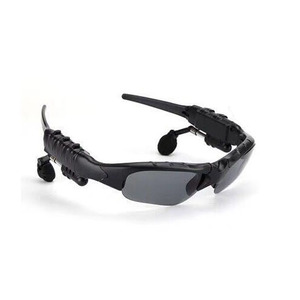
Direct factory catalog of AI camera glasses, open-ear Bluetooth audio eyewear, electrochromic sunglasses, and real-time translation solutions engineered for global distributors and private labels.
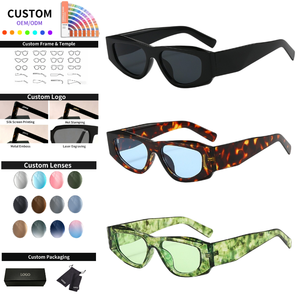

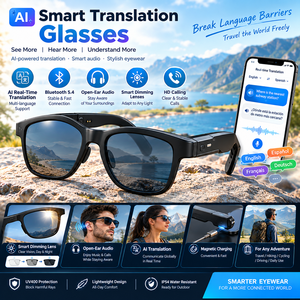
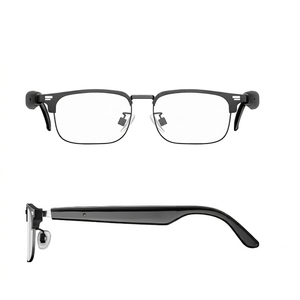
1. Executive Summary & Sourcing Landscape in China
The global wearable electronics market is undergoing a seismic paradigm shift. Traditional eyewear is converging rapidly with artificial intelligence, open-ear spatial acoustics, micro-optics, and electrochromic materials. As international brands, consumer electronic distributors, and retail chains pivot toward hands-free interaction, China—specifically the specialized hardware ecosystem anchored in Shenzhen, Guangdong—has established itself as the world's primary engine for hands-free smart glasses development and manufacturing.
This B2B Procurement Whitepaper serves as an authoritative evaluation guide for purchasing executives, product managers, and brand strategists. Sourcing hands-free glasses requires more than evaluating aesthetic frame designs; it demands a deep technical understanding of System-on-Chip (SoC) integration, power density management, dual-microphone beamforming algorithms, optical transmission coefficients, and global compliance certifications (CE, FCC, RoHS, REACH). Navigating China's vast supplier network requires distinguishing between tier-3 assembly workshops and true Original Design Manufacturers (ODM) capable of handling micro-SMT engineering and custom firmware routing.
Information Gain Key Takeaway: Modern hands-free smart glasses have evolved from mere Bluetooth earphone alternatives into multimodal AI edge terminals. Successful B2B sourcing depends on choosing manufacturing partners capable of balancing sub-40-gram structural ergonomic limits with dual-battery cell management and directional acoustic wave cancellation.
2. Technological Architecture & Future Development Trends (2026–2030)
To capture market share in North America, Europe, and the Asia-Pacific region, importers must understand the key hardware and software trends driving smart eyewear over the next five years:
A. Multimodal AI Integration and Edge-to-Cloud Routing
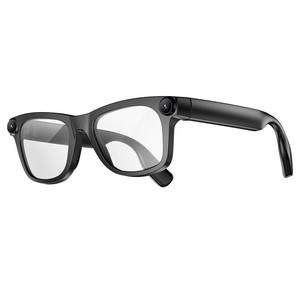
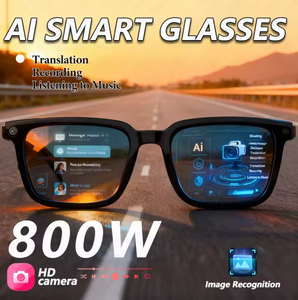
Hands-free smart glasses are transitioning from basic voice-command devices into ambient computing platforms. Advanced models now integrate directly with Multimodal LLMs (Large Language Models) such as OpenAI GPT-4o and Google Gemini. Integrated 8MP/4K micro-cameras capture visual inputs in real time, allowing users to perform zero-latency photo analysis, contextual translation across 100+ languages, and visual query processing without picking up a smartphone.
B. Electrochromic Dimming & Photochromic Optical Lenses
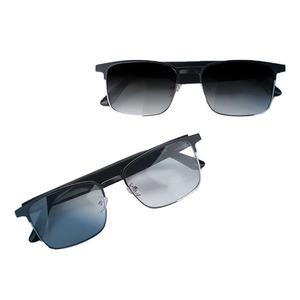
A critical limitation of first-generation smart eyewear was static lens shading. Future-proof procurement focuses heavily on liquid-crystal electrochromic (EC) smart tinting and fast-response photochromic technology. By touching an integrated capacitive temple sensor or relying on automated ambient light sensors, users can adjust lens transparency from Category 1 (indoor 85% light transmission) to Category 3 (outdoor 15% transmission) in under 0.5 seconds—ideal for transitional environments and outdoor sports like cycling.
Open-Ear Directional Acoustics
Dual directional speakers built into temple arms utilize reverse sound wave cancellation to eliminate audio leakage while preserving situational awareness for cyclists and commuters.
Distributed Battery Architecture
By placing dual lithium-ion polymer batteries symmetrically in both temple tips, modern frames maintain a 50:50 weight ratio while delivering 6–8 hours of continuous audio playback.
Ultra-Lightweight Ergonomic Materials
Swiss Grilamid TR90 frames paired with titanium alloy flex-hinges keep total weight between 32g and 45g, ensuring maximum comfort during extended daily wear.
3. Global B2B Sourcing Trends & Procurement Matrix
Sourcing strategies vary significantly depending on retail channel positioning. Commercial buyers generally operate under four major cooperation frameworks: Ready-to-Ship Wholesale, OEM Structural Customization, Private Label White-Glove Branding, and Regional Exclusive Distribution. Below is a comparative breakdown to help procurement teams select the right tier:
| Procurement Model | Typical MOQ | Sampling Lead Time | Customization Scope | Primary Target Channel |
|---|---|---|---|---|
| Wholesale Supply | 20 – 100 Units | 1 – 3 Days | Standard Factory Packaging & Logo | Amazon/Ebay Sellers, Boutique Stores |
| Private Label | 300 – 500 Units | 7 – 10 Days | Custom Frame Color, Silk Logo, Giftbox, User Manual | Regional Brands, Consumer Electronics Chains |
| OEM / ODM Custom | 1,000+ Units | 15 – 30 Days | Custom Tooling Mould, PCB Redesign, App API Integration | Telcos, Eyewear Chains, Enterprise Projects |
| Distributor Program | Negotiable Tier | Immediate Stock | Regional Territorial Exclusivity & Marketing Assets | National Importers & Tech Wholesalers |
4. Quality Assurance & Factory Evaluation Criteria
When auditing top Chinese hands-free glasses suppliers, international purchasing directors must verify that factories adhere to strict quality control standard operating procedures (SOPs). Shenzhen Ennava Technology Co., Ltd. implements a multi-stage testing protocol across every production lot:
- Acoustic Anechoic Chamber Testing: Verifying microphone Total Harmonic Distortion (THD) and noise reduction performance under simulated wind speeds up to 30 km/h.
- Environmental Resilience Testing: Subjecting frames to thermal shock cycles (-20°C to 65°C), high-humidity storage, and IP54 dust/water-resistance jet sprays.
- Structural Stress Verification: Testing temple flex hinges through 10,000 open-close mechanical cycles to prevent long-term hinge fatigue or micro-crack fractures.
- Optical & RF Emission Integrity: Ensuring 100% UV400 lens filtering and conducting SAR (Specific Absorption Rate) RF radiation testing for CE and FCC safety compliance.
5. Corporate Advantage: Shenzhen Ennava Technology Co., Ltd.
Shenzhen Ennava Technology Co., Ltd. is a specialized B2B manufacturer and exporter of smart eyewear headquartered in Longgang District, Shenzhen. By combining optical design expertise with micro-electronic hardware development, Ennava offers global clients an agile supply chain backed by high-capacity manufacturing lines.
Full-Process In-House Engineering
From schematic SMT placement to customized injection molding, Ennava oversees the entire production chain to maintain strict batch-to-batch quality consistency.
7–10 Day Fast Custom Sampling
Accelerate your time-to-market. Rapid prototyping allows brand partners to evaluate customized logos, frame finishes, and packaging in just one week.
Turnkey Export & Compliance Support
Ennava provides comprehensive export documentation, including CE, FCC, RoHS, and MSDS battery transport certifications for fast customs clearance globally.
Hands Free Smart Glasses Sourcing FAQ
Answers to essential technical and commercial questions raised by international procurement managers prior to placing production orders.
Ready to Scale Your Smart Eyewear Line?
Download our complete 2026 product catalog, request factory-direct pricing tiers, or book a fast 7-day custom sample evaluation with our engineering team today.