130+ Languages
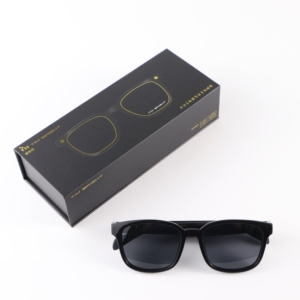
Explore top-performing AI camera glasses, real-time audio translators, electrochromic sunglasses, and blue-light wearables engineered for global OEM/ODM deployment.
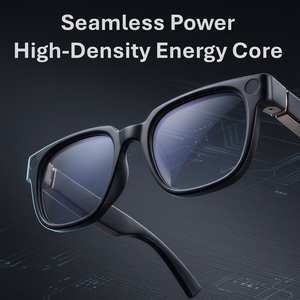
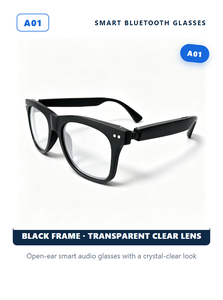
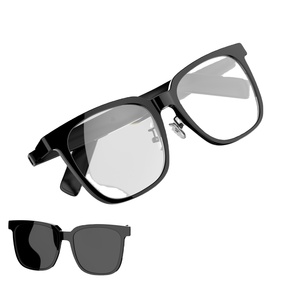
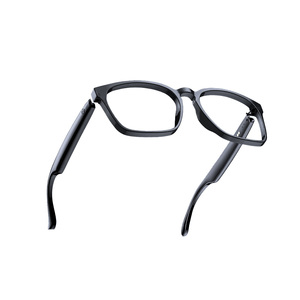
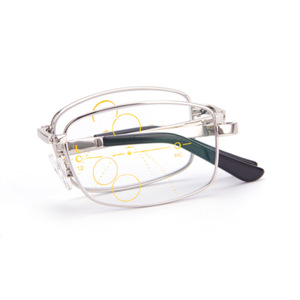
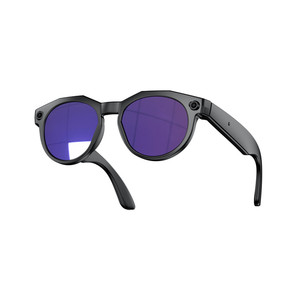
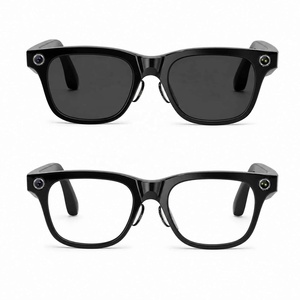
How Guangdong’s micro-electronics clusters and optical engineering hubs are driving down unit costs while escalating computational intelligence for global B2B procurement leaders.
Shenzhen and Dongguan have integrated ultra-low-power System-on-Chip (SoC) microarchitectures, precision optical lens fabrication, and micro-acoustic drivers into unified automated assembly lines. This convergence slashes BOM (Bill of Materials) costs by 35% compared to Western assembly counterparts.
Modern bulk smart eyewear contracts prioritize low-latency neural processing. Next-gen Chinese factories embed specialized Bluetooth 5.4 LE SoCs capable of executing on-device noise reduction while offloading real-time 130+ language translation tasks to cloud LLMs in under 400 milliseconds.
With automated optical alignment systems and ultrasonic sealing equipment, top-tier factories maintain bulk yield rates above 98.6%. For B2B importers, this translates directly to lower warranty reserves and predictable gross margins across consumer retail channels.
In-depth technical benchmarking for procurement directors planning multi-year stock keeping unit (SKU) roadmaps and private-label expansions.
| Technology Trend | Technical Benchmark | Consumer Impact | B2B Sourcing Priority |
|---|---|---|---|
| Multimodal AI Vision & Translation | 8MP-12MP sensors + Dual Mic ENC + Multi-LLM API Bridge | Real-time HUD translation, landmark voice query, visual search | High Growth (Consumer Electronics & Travel Retail) |
| Electrochromic (EC) Adaptive Tint | 0.1-second voltage switching, <1.5mW power draw | Instant transition from clear indoor lens to category-3 dark tint | Essential (Premium Lifestyle & Outdoor Sports) |
| Directional Acoustic Waveguides | Reverse sound wave phase cancellation, <5% audio leakage | Private hands-free calling without blocking ambient traffic sounds | Mainstream Standard (Urban Commuter & Business Eyewear) |
| Dual-Cell Hinge Power Architecture | TR90 memory polymer frames, dual 110mAh-300mAh battery distribution | All-day ergonomic weight balance under 42 grams | Critical (Prescription & Daily Wear Able SKUs) |
To capture market share in saturated consumer wearable markets, B2B procurement managers must understand the core engineering trade-offs between optical clarity, acoustic isolation, and thermal management.
Traditional open-ear Bluetooth glasses suffered from severe sound leakage, compromising user privacy in quiet conference rooms or public transit. Leading OEM factories in China now implement Out-of-Phase Acoustic Beamforming. Dual micro-speakers placed in the temples generate anti-phase acoustic waves that cancel out sound spilling laterally, keeping calls private while maintaining ambient safety.
Integrating 8MP or 4K video recording modules into ultra-lightweight TR90/Titanium frames introduces significant thermal constraints. Modern smart camera glasses employ specialized copper graphite heat-spreading foils and auto-throttling ISP firmware. This architecture allows continuous 1080p video capture without frame temperatures exceeding the 41°C ISO safety threshold for skin contact.
Moving away from legacy photochromic lenses (which rely on UV light and react slowly in hot weather), next-gen electrochromic smart sunglasses utilize a multi-layer ITO (Indium Tin Oxide) film. By applying a subtle 1.2V micro-current controlled via frame touch sensors or mobile apps, the lens tint shifts instantly from light transmittance to dark shading in milliseconds.
Evaluating tooling investment, unit economics, software customization, and time-to-market for enterprise hardware sourcing.
| Evaluation Factor | Ready Wholesale Sourcing | Private Label Branding | OEM Customization | Full ODM Co-Development |
|---|---|---|---|---|
| Typical Minimum Order Quantity (MOQ) | 50 – 200 Units | 500 – 1,000 Units | 1,000 – 3,000 Units | 3,000 – 10,000+ Units |
| Tooling & NRE Costs | $0 (Existing Mold) | Minimal (Silk-print/Packaging) | Moderate (Custom Hinge/Temple) | High (Complete Mold Engineering) |
| Time-to-Market Lead Time | 3 – 7 Days | 14 – 21 Days | 30 – 45 Days | 60 – 90+ Days |
| Software / SDK Modification | Standard Stock App | Branded App UI & Splash Screen | Custom AI Prompt & Voice Commands | Deep Firmware & API Integration |
| Best Suited For | E-commerce Testing & Boutique Retailers | Established Consumer Brands | Niche Functional Markets (Cycling/Medical) | Tier-1 Tech Enterprises & Telecoms |
Protecting global brand equity through rigorous component verification, acoustic chamber calibration, and environmental stress testing.
Every incoming batch of lithium-polymer micro batteries, Bluetooth microchips, and optical lenses undergoes 100% Incoming Quality Control (IQC). Batteries are stress-tested for cycle life and thermal safety under high discharge rates.
Frames are tested in anechoic sound chambers using artificial head simulators (HATS) to measure frequency response curves, total harmonic distortion (THD), and active dual-mic noise-cancellation (ENC) performance before final potting.
For smart cycling eyewear and outdoor sports series, assembled frames endure IPX5/IPX6 pressurized water jets, 48-hour salt spray corrosion chambers, and sweat resistance testing to ensure long-term durability in tropical climates.
Addressing key logistics, technical compliance, IP security, and customization questions asked by international buyers during supplier audits.
Our bulk smart glasses products come with complete compliance dossiers required for customs clearance and marketplace onboarding. These include CE-RED (Radio Equipment Directive for Europe), FCC ID (Part 15B/15C for USA), RoHS 2.0, REACH, UN38.3 lithium battery transport safety certificates, and MSDS testing reports. For prescription and reading smart frames, FDA device registration support and EU Medical Device Regulation (MDR) technical files can also be provided upon request.
For ready-to-ship wholesale orders using existing factory tooling, our minimum order quantity starts as low as 50 to 100 units with a 3-5 working day dispatch time. For private label orders (custom laser logo engraving, customized silk-print silk boxes, user manuals), the typical MOQ is 500 units. Full OEM/ODM custom frame colorways or structural changes require an MOQ of 1,000 to 2,000 units, with customized physical samples delivered within 7 to 10 working days.
Our AI translator smart glasses utilize high-efficiency Bluetooth 5.4 audio streaming combined with dedicated iOS and Android application software. The glasses capture incoming audio via dual noise-canceling MEMS microphones and transmit speech data to our cloud AI engine (supporting 130+ languages and dialects). Translated speech is played back into the user's ear via directional speakers within 400 milliseconds, or rendered on visual smartphone displays for dual-way conversation mode during cross-border travel and international meetings.
Yes. All frame models feature modular lens grooving designed to accommodate standard optical lab cutting. Bulk orders can be pre-fitted at our facility with anti-blue light clear lenses, TAC polarized sunglass lenses, photochromic transition lenses, or electrochromic dynamic tint lenses. Furthermore, we provide optical rim adapters so your end customers can visit local optometrists to install custom prescription single-vision or progressive lenses easily.
We provide a comprehensive 12-month manufacturer warranty covering hardware circuitry, Bluetooth connectivity, optical components, and battery degradation. For volume shipments, we typically supply 1% to 2% extra spare units or key replaceable parts (temple arms, magnetic charging cables) free of charge to streamline localized customer service. Any verified defective unit exceeding normal thresholds can be credited toward your next batch or replaced directly.
Intellectual property security is fundamental to our enterprise partnerships. We sign legally binding non-disclosure agreements (NDAs) prior to receiving initial CAD files, 3D renders, or firmware requirements. Tooling molds engineered specifically for your OEM contract are registered exclusively under your company name, stored in dedicated tooling vaults, and restricted from use in generic factory catalog production.