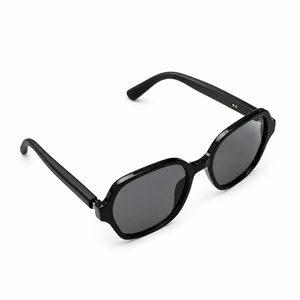
Black Audio Sunglasses W12-VA12 Open-Ear Smart Audio Glasses Stereo Headset for Outdoor Driving Sports
Open-Ear Stereo
BLE 5.4
UV400 Lens
Low Latency
As artificial intelligence transforms consumer wearables, Chinese original equipment manufacturers (OEMs) and original design manufacturers (ODMs) have emerged at the epicenter of smart audio and translation glasses production. Sourcing decision-makers—spanning international importers, consumer technology distributors, optical retail chains, and enterprise solution providers—require deep structural insights into hardware convergence, neural machine translation (NMT) API integration, and supply chain verification to secure market dominance.
The global wearable AI translation market is experiencing an unprecedented compound annual growth rate (CAGR) exceeding 28.4%. Driven by advancements in low-power Bluetooth 5.4 SoCs, miniaturized MEMS beamforming microphone arrays, dynamic electrochromic lenses, and cloud-to-edge LLM (Large Language Model) integration, AI glasses are shifting from niche tech novelties to daily productivity tools.
However, global buyers encounter systemic friction when evaluating China exporters: inconsistencies in acoustic privacy sealing, high latency in real-time cross-language interpretation, substandard optical UV compliance, and unpredictable batch quality. Resolving these challenges requires working directly with top-tier Shenzhen manufacturing infrastructure that enforces rigorous ISO9001/ISO14001 operational standards and delivers validated technical specifications.
Direct from our precision assembly facilities: flagship models tailored for global B2B distribution, private label customization, and scalable procurement.
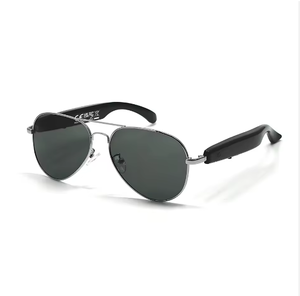
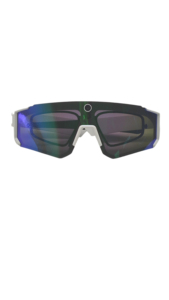
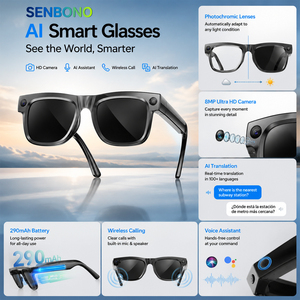
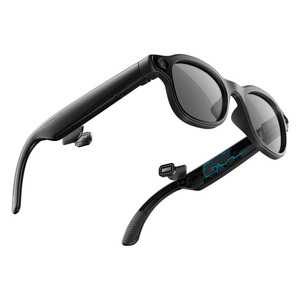
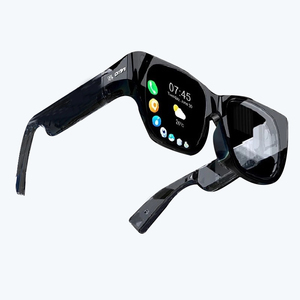
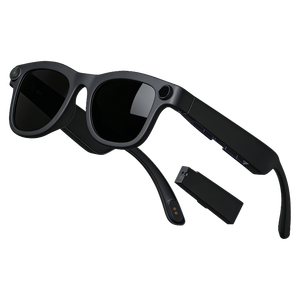
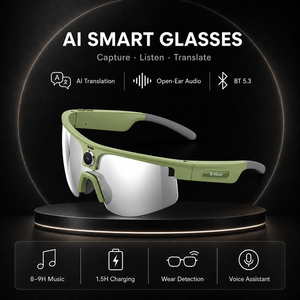
Shenzhen Ennava Technology Co.,Ltd. operates specialized hardware production, software integration, and optical assembly infrastructure tailored exclusively for international B2B buyers.
Every pair of smart translation glasses undergoes 6-stage QC: incoming component verification (IQC), SMT optical alignment, acoustic spectrum frequency testing, IPX waterproof dipping validation, Bluetooth RF chamber testing, and final burn-in stress cycles.
We provide full-stack hardware and software customization: custom TR90 or acetate frame molding, photochromic/polarized lens insertion, silk-screened brand logos, localized packaging, custom BLE naming, and proprietary mobile app API binding.
Accelerate your go-to-market timeline. Our dedicated rapid-response R&D engineering team delivers customized working prototypes—complete with branded firmware and functional packaging—within 7 to 10 working days of design freeze.
The convergence of generative AI models and ultra-compact wearable electro-optics is redefining the specifications required for market viability. Exporters and brand buyers must evaluate four foundational technical vector shifts.
First-generation translation glasses relied on basic smartphone microphone streaming via standard A2DP Bluetooth profiles, creating unacceptable translation latency exceeding 2.5 seconds. Current 2026 export-grade platforms utilize low-power Bluetooth 5.4 LE Audio protocols coupled with dual-channel opus audio codecs.
By routing voice data through hybrid cloud-edge API architectures (integrating Google Cloud NMT, OpenAI Whisper, DeepL, and localized offline translation models), voice-to-voice interpretation latency has been compressed to under 200 milliseconds. This enables natural simultaneous interpretation during bilateral business negotiations, international tourism, and cross-border lectures.
A primary bottleneck in open-ear audio glasses has been sound leakage—which compromises privacy in professional environments—and ambient acoustic interference that degrades NMT speech recognition accuracy. Top Chinese exporters address this through inverse-phase soundwave cancellation cavities combined with dual MEMS microphone beamforming arrays.
By positioning directional micro-speakers at precise anatomical angles relative to the user's tragus, sound pressure waves are focused directly into the ear canal while cancelling out external lateral sound scatter. Concurrently, environmental noise cancellation (ENC) algorithms filter out wind noise up to 35 km/h, ensuring crystal-clear voice capture even in loud traffic or crowded exhibition halls.
While pure audio translation glasses capture high volume in mid-tier retail, high-end enterprise demand is gravitating toward heads-up display (HUD) AR integration. Exporters are embedding diffraction optical waveguides paired with Micro-OLED engines, rendering real-time translated subtitles directly into the wearer’s visual field.
Simultaneously, electrochromic lens tinting tech allows users to adjust lens darkness electronically via touch-temple controls or auto-sensing ambient light sensors. This optical flexibility bridges indoor business meetings with outdoor sports, replacing traditional static sunglasses.
Procurement strategies among international electronics distributors are shifting from volume-driven off-the-shelf buying to agile OEM partnerships built on certified compliance, flexible software SDKs, and modular inventory management.
Modern B2B buyers no longer seek unbranded white-label goods. The dominant trend focuses on complete brand ecosystem customization. Exporters must provide ready-to-ship localized firmware (supporting multi-language voice prompts), custom mobile app white-labeling on iOS App Store and Google Play, and customized retail-ready magnetic gift box packaging.
By offering lower minimum order quantities (MOQs) for branded packaging runs, tier-1 suppliers empower regional brands to compete directly against global tech giants.
Importing smart wearable electronics requires navigating strict global regulatory frameworks. Non-compliant shipments risk customs seizures, costly warehouse holds, or marketplace removal.
Top China exporters maintain verified documentation packages, including CE-RED (Europe), FCC ID (United States), RoHS, REACH, UN38.3 battery transport safety certification, MSDS reports, and EPR compliance filings (WEEE/Packaging). Selecting a manufacturer with verified testing reports ensures smooth customs clearance and zero retail compliance friction.
A comprehensive technical matrix to assist purchasing managers in selecting the optimal product class for target market segments.
| Architecture Class | Core Chipset & Wireless | Acoustic / Visual Hardware | Battery & Power SLA | Target Sourcing Channel |
|---|---|---|---|---|
| Pure Audio Smart Glasses | BES2700 / Qualcomm QCC3040 BT 5.3 / 5.4 LE Audio |
Open-Ear Directional Micro-Speakers Dual MEMS Microphone Array |
80mAh – 110mAh 5–7 Hours Music / Call Time |
Optical Retail Chains, Gift Suppliers, E-Commerce Stores |
| AI Voice & Translation Glasses | Actions AT3019 / Realtek RTL8763 Dual Mode Bluetooth + App NMT |
Beamforming Noise-Canceling Mics Low-Leakage Sound Cavity |
110mAh – 150mAh 4–6 Hours Continuous Translation |
Cross-Border Retailers, Travel Tech Distributors, Corporate Importers |
| AI Camera & Recording Glasses | Master SOC + WiFi 6 Modules 8MP/1080P/4K H.265 Sensor |
Wide-Angle Lens Camera + Speaker 32GB–128GB Onboard Flash |
220mAh – 300mAh (+ Power Case) 70–90 Mins Video Recording |
Outdoor Gear Importers, Action Sport Outlets, Content Creator Brands |
| Micro-OLED AR Translation Glasses | Qualcomm Snapdragon AR1 Gen 1 Micro-OLED + Optical Waveguide |
Full-Color Monocular/Binocular HUD Integrated Dual Microphone ENC |
290mAh – 400mAh 3–4 Hours Active AR Display |
Enterprise Tech Importers, Industrial Solution Providers, Flagship Brands |
Expert answers addressing operational, technical, and logistics queries raised by overseas purchasing teams.
Scale your brand with industry-certified manufacturing, sub-200ms real-time translation technology, and rapid 7-10 day sample delivery. Contact our B2B project engineering team today for immediate factory-direct quotes and technical specifications.
Get a Quote