0%

Choosing Smart Audio Cycling Glasses in 2026 requires more than comparing speakers, camera-style frames, or futuristic designs. A good pair should support awareness without competing with traffic, wind, or conversation. It should also feel stable during climbs, sharp turns, and uneven road surfaces. Comfort matters as much as sound quality.

This guide examines the practical details cyclists often notice after several rides. These include frame pressure, lens clarity, microphone performance, battery endurance, charging time, water resistance, and control placement. Manufacturer claims deserve attention, but they should not be accepted blindly. Battery figures may change with volume, temperature, calls, and navigation use. Independent reviews and hands-on testing can reveal those differences.

Fit comes first.

A professional optician can help assess prescription compatibility, lens protection, and visual comfort. Cyclists should also check whether the audio remains clear at safe listening levels. Open-ear designs may preserve environmental awareness, but they cannot remove every riding risk. Weather, road noise, poor fit, and software problems can still affect performance. No product is perfect, including the most advanced Smart Audio Cycling Glasses.

The strongest choice depends on your route, riding duration, eyesight, and communication needs. A commuter may value reliable calls and simple controls. A long-distance rider may prioritize battery life and replaceable lenses. Sport-focused cyclists may prefer a lighter frame with fewer distractions. This article offers a careful framework for comparing those priorities, while acknowledging an uncomfortable truth: impressive specifications do not always create a better ride.
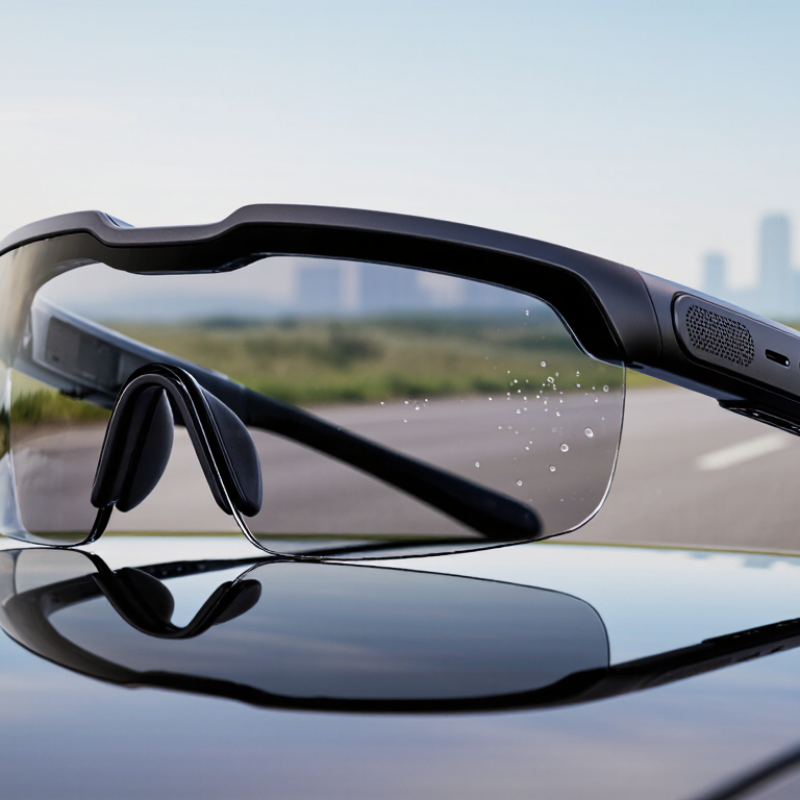
How to Choose Smart Audio Cycling Glasses in 2026?

Understanding Smart Audio Cycling Glasses and Their Core Functions

How to Choose Smart Audio Cycling Glasses in 2026?

Understanding Smart Audio Cycling Glasses and Their Core Functions

Smart audio cycling glasses combine eye protection, open-ear sound, microphones, and wireless controls. Their main purpose is access to navigation, calls, and music without blocking surrounding traffic. The International Data Corporation reported 537.9 million wearable devices shipped globally in 2024. That scale shows strong demand, but it does not guarantee better cycling equipment.

Open-ear speakers should deliver clear speech while allowing horns, bells, and tire noise to remain audible. Test them beside a busy road, not only in a quiet shop. Microphones also matter during wind and movement. Look for noise reduction, physical controls, and reliable voice pickup. Battery life should cover your normal ride, with extra capacity for navigation and emergency calls. A secure fit is essential. Glasses that slide during a climb quickly become distracting.

Check lens coverage, UV protection, ventilation, water resistance, and charging design. The World Health Organization reports about 1.19 million road deaths annually, so situational awareness cannot be treated as a software feature. Audio volume limits may protect hearing, but they cannot replace careful riding. I would also question exaggerated battery claims, because laboratory tests rarely match cold weather or strong wind. Product specifications are useful, yet real-world testing remains more honest.

Identifying Your Cycling Needs, Riding Conditions, and Audio Preferences

How to Choose Smart Audio Cycling Glasses in 2026?

Your route should guide the purchase. Urban commuters need clear traffic awareness, stable navigation, and microphones that resist wind. Gravel riders may value dust protection, longer battery life, and secure frames over advanced calls. The Outdoor Foundation’s 2024 Outdoor Participation Trends Report recorded 54.7 million U.S. bicycling participants in 2023. That range of riders makes one “best” audio setup unlikely. Consider your actual roads, not an ideal weekend ride.

Open-ear audio can preserve environmental awareness better than sealed earbuds, but it is not automatically safe. The World Health Organization reports about 1.19 million annual road deaths worldwide. NHTSA recorded 1,105 bicyclist deaths in the United States during 2022.

Keep volume moderate near junctions, buses, and shared paths. Test voice clarity beside moving traffic. Wind can make impressive audio useless.

I would also question advertised battery figures, since navigation, calls, and cold weather can reduce runtime.

Tips: Choose lenses suited to your light conditions. Check frame stability with a helmet. Try voice controls while wearing gloves. Confirm water resistance for your usual rides. Keep a simple backup plan, because electronics fail. Most importantly, compare audio detail with situational awareness. Louder is not better.

Comparing Sound Quality, Safety Features, Comfort, and Lens Options

How to Choose Smart Audio Cycling Glasses in 2026?

Sound quality matters, but loudness should not dominate your decision. Choose glasses that keep speech and navigation clear without blocking traffic sounds. Open-ear audio can feel safer in busy streets, though wind noise may reduce detail. Test the glasses beside moving cars, not only in a quiet shop. Keep volume moderate. Your ears need awareness.

Safety features deserve practical attention. Look for stable controls, clear voice prompts, and a secure fit during quick shoulder checks. Buttons should remain usable with sweaty or gloved fingers. Check battery warnings before longer rides. A low-battery alert arriving late is frustrating and potentially distracting. I would also examine charging protection and weather resistance, but product claims still require careful reading.

Comfort decides whether smart glasses become daily equipment. The frame should sit evenly without pressing your temples or sliding down a damp nose. Wear them for thirty minutes before buying. Lens options should match your routes: clear lenses suit low light, tinted lenses reduce glare, and photochromic lenses adapt outdoors. However, adaptation may be slower in cold weather. Polarized lenses can reduce road glare, yet some screens may appear darker. My first choice would not be universal; changing light, helmet fit, and personal vision needs can expose flaws quickly.

How to Choose Smart Audio Cycling Glasses in 2026? - Comparing Sound Quality, Safety Features, Comfort, and Lens Options

Evaluation Dimension Basic Open-Ear Configuration Balanced Everyday Configuration Performance-Focused Configuration Prescription-Oriented Configuration
Best Use Case Short recreational rides and casual listening Daily commuting, training, and general outdoor use Longer rides where stability, clarity, and weather resistance matter Riders who need corrective lenses without using separate eyewear
Audio Technology Open-ear directional speakers positioned near the ears Open-ear directional speakers with basic acoustic tuning Open-ear directional speakers with improved beam control and equalization Open-ear speakers integrated into a prescription-compatible frame
Sound Quality ★★★☆☆
Clear speech and podcasts; limited bass in noisy environments
★★★★☆
Balanced speech, music, and navigation prompts at moderate volume
★★★★☆
Better vocal detail and perceived fullness, although open-ear designs remain less isolating than sealed headphones
★★★☆☆–★★★★☆
Depends strongly on frame fit, lens thickness, and speaker placement
Ambient-Awareness Benefit High, because the ear canal remains open High, provided the listening volume is kept moderate High, but strong wind noise can encourage unsafe volume increases High, with the same requirement to keep volume low enough to hear traffic
Typical Playback Time About 4–6 hours per charge About 5–8 hours per charge About 6–10 hours per charge, depending on volume, calls, and connected features About 4–8 hours per charge, depending on frame and battery design
Charging Method Magnetic or proprietary charging connector is common Magnetic charging is common; charging-case availability varies Magnetic charging with battery-status feedback through a companion device is common Frame-specific charging system; check whether the glasses can be charged while stored
Weather Resistance Usually splash-resistant; suitable for light sweat and light rain only Typically suitable for sweat and light rain when the product is explicitly rated Often designed for heavier sweat and changing weather, but immersion protection is not assumed Varies considerably; prescription fittings should not be treated as waterproof without a stated rating
Recommended Protection Level Look for a clearly stated IP rating; IPX4 means protection from water splashes IPX4 or higher is preferable for regular cycling in variable weather IPX5 or higher can offer stronger water-jet protection, but an IP rating does not guarantee protection from immersion Choose the highest clearly documented rating that remains compatible with the prescription frame
Call and Navigation Features Basic microphone and phone audio routing Hands-free calls, navigation prompts, and voice-assistant access are commonly supported Multiple microphones and wind-noise reduction may improve calls, but no system eliminates all wind noise Feature support depends on the frame electronics and the connected smartphone
Wind-Noise Handling Limited; performance may decline noticeably above moderate riding speeds Moderate; a close-fitting frame and well-positioned microphones help Usually the strongest option, especially with directional microphones and wind screens Highly dependent on frame geometry and how securely the prescription frame fits
Traffic Safety Considerations Never use a volume level that masks horns, bells, sirens, voices, or approaching vehicles Use a low-to-moderate volume and keep both ears unobstructed; follow local cycling laws Advanced audio does not replace visual observation, shoulder checks, lights, or reflectors Corrective vision can support visual awareness, but audio should remain secondary to traffic observation
Frame Weight Often approximately 35–45 g, depending on battery and lens construction Often approximately 35–50 g Often approximately 40–55 g because of larger batteries, stronger frames, or additional controls Often approximately 40–60 g before the final prescription lens thickness is considered
Long-Ride Comfort ★★★☆☆
Comfortable for many users, but basic nose pads and temple arms may create pressure over time
★★★★☆
Look for adjustable nose pads, balanced weight distribution, and non-slip temple tips
★★★★☆
Best when the frame remains stable without excessive clamping pressure
★★★☆☆–★★★★☆
Fit must account for prescription lens weight, bridge shape, and helmet compatibility
Helmet Compatibility Usually compatible with road and commuter helmets, but thick temple arms may interfere with straps Check temple-arm thickness and whether the helmet strap can sit flat Prioritize slim, flexible temple arms and a secure fit that does not shift during head movement Test the complete combination with the intended helmet before purchase
UV Protection Choose lenses specifically labeled for 100% UVA and UVB protection 100% UVA and UVB protection should be treated as a minimum requirement Look for documented UVA and UVB protection rather than relying on lens darkness Confirm that the prescription lenses provide the same documented UV protection
Polarized Lens Option Sometimes available; useful for reducing glare from roads and water Often available and useful for bright daytime riding Useful for glare reduction, but some digital displays may appear darker or show viewing-angle effects Available only when supported by the prescription lens supplier and frame design
Photochromic Lens Option Less common; transition speed and final darkness vary with temperature and UV exposure Useful for rides moving between shade and sunlight Helpful for changing light, but photochromic lenses may not darken fully inside a vehicle Available in selected prescription materials; confirm activation range and replacement options
Lens Tint Choices Clear, gray, or lightly tinted lenses are common ClearGrayAmber GrayAmberRosePhotochromic Choice depends on prescription compatibility, optical clarity, and the intended light conditions
Impact and Optical Quality Prefer lenses made from impact-resistant polycarbonate or comparable cycling-grade materials Look for optical clarity across the usable field of view and a secure lens-retention system Wraparound coverage can improve wind and debris protection, but excessive curvature may require optical adjustment Use a qualified optical provider to confirm lens material, curvature, thickness, and impact requirements
Controls Physical buttons are generally easier to operate with gloves than small touch controls Physical controls or large tactile surfaces are preferable while riding Separate controls for volume, playback, and calls can reduce phone handling Controls should remain reachable without disturbing prescription lens alignment
Best Buying Priority Clear speech, secure fit, UV protection, and reliable basic controls Balanced audio, comfortable fit, documented weather resistance, and suitable lens options Wind-noise control, battery endurance, stable fit, and strong optical coverage Prescription compatibility, optical quality, fit adjustment, and replacement-lens support

Note: Battery life, water resistance, weight, audio performance, and lens availability vary by design and usage conditions. Always verify the manufacturer’s current technical specifications, the stated IP rating, local cycling regulations, and the fit with your helmet before purchase.

Checking Battery Life, Connectivity, Durability, and Device Compatibility

How to Choose Smart Audio Cycling Glasses in 2026?

Battery life should match your actual riding pattern, not a laboratory promise. Look for at least six hours of audio use with calls enabled. GPS navigation, loud volume, and cold weather can reduce that figure. The Bluetooth SIG 2024 Market Update forecasts annual Bluetooth device shipments will reach 7 billion by 2028. That growth improves accessory choice, but it also makes compatibility testing more important. Test it before purchase.

Check Bluetooth version support, pairing stability, and reconnection speed. Glasses should connect quickly with your phone and cycling computer. Confirm support for your operating system, navigation app, microphone, and media controls. GSMA Intelligence reported 4.7 billion mobile internet users worldwide in 2023, showing how widely phones support connected services. However, a device can still fail with an older phone. I have seen pairing work once, then disappear after a software update.

Durability needs practical evidence. Look for an IP rating based on IEC 60529, not vague “water-resistant” wording. IPX4 may handle splashes, while heavy rain requires more caution. The frame should stay secure over rough pavement and fit beneath a helmet without pressure points. Check lens clarity, hinge strength, charging-port protection, and replacement-part availability. Rain is real. Battery indicators can also be inaccurate, especially near empty. Carrying a small backup light remains sensible, even when the glasses seem dependable.

Evaluating Privacy, Maintenance, Pricing, and Long-Term Value

Choosing smart audio cycling glasses in 2026 requires more than comparing battery numbers. Privacy deserves equal attention during every ride. Check whether voice commands, location data, and riding habits stay on the device or reach remote servers. Read the data policy before pairing the glasses with your phone. Look for clear deletion controls, limited permissions, and encrypted connections. Offline controls matter. A microphone indicator can also prevent accidental recording near traffic lights or cafés.

Maintenance affects real ownership costs. Sweat, road dust, and light rain can damage charging contacts over time. Choose replaceable nose pads, accessible lenses, and a case that protects the frame. After each ride, wipe the glasses with a clean microfiber cloth. Do not use household chemicals. Test charging cables and speaker openings regularly. Small faults become expensive when replacement parts are unavailable. I would also question vague water-resistance claims, because laboratory ratings rarely describe months of daily cycling.

Pricing should include accessories, repairs, subscription fees, and battery decline. A cheaper model may lose value quickly if its battery becomes weak after two seasons. A more expensive option can make sense when software updates, repair support, and spare parts remain available. Still, promises are not proof. Compare warranty terms, support response times, and independent user reports. My assessment would record comfort after a two-hour ride, not just the first impressive demonstration. Some features may look essential indoors but feel distracting beside traffic. Long-term value means useful performance, manageable privacy, and predictable maintenance—not simply the lowest checkout price.

FAQS

How should I choose audio cycling glasses for my regular routes?

Match the glasses to your roads, weather, and riding time. Urban riders may need clear traffic awareness and wind-resistant microphones. Gravel riders may prefer secure frames, dust protection, and longer battery life. Your everyday route matters more than an ideal weekend ride.

Are open-ear cycling glasses automatically safe?

No.

How much battery life should cycling glasses provide?

Look for at least six hours of real audio use with calls enabled. Navigation, high volume, and cold weather can shorten runtime. Battery displays may become unreliable near empty. Carry a simple backup plan.

What connectivity checks should I make before buying?

Test pairing with your phone and cycling computer before purchase. Check reconnection speed after moving out of range. Confirm compatibility with your operating system, navigation app, microphone, and media controls. An older phone may behave differently after a software update.

How can I test audio quality in windy conditions?

Test voice clarity beside moving traffic or strong outdoor airflow. Wind can make clear indoor audio nearly useless outside. Try voice controls while wearing gloves. I would not trust a quiet showroom test alone.

What durability features matter for daily cycling?

Look for a clear water-resistance rating, not vague splash protection. Check frame stability under a helmet and on rough pavement. Inspect hinges, lenses, charging contacts, and speaker openings. Heavy rain still deserves caution.

How can I protect privacy while using smart cycling glasses?

Read the data policy before pairing the glasses. Check how voice commands, location data, and riding habits are stored. Prefer clear deletion controls, limited permissions, and encrypted connections. Offline controls are useful. A microphone indicator can reduce accidental recording concerns.

What maintenance keeps audio cycling glasses working longer?

Wipe sweat and dust with a clean microfiber cloth after each ride. Avoid household chemicals. Keep charging contacts dry and inspect cables regularly. Replaceable nose pads and accessible lenses can reduce future costs. Small faults grow.

How should I judge the long-term value and price?

Include accessories, repairs, subscriptions, and battery decline in the total cost. Compare warranty terms, repair support, software updates, and spare parts. Test comfort after a two-hour ride, not only during a short demonstration. A higher price is not proof of better value.

Conclusion

Choosing Smart Audio Cycling Glasses in 2026 begins with understanding how they combine eyewear, open-ear audio, hands-free controls, and cycling-focused safety features. Start by considering your riding goals, routes, weather conditions, traffic levels, and preferred listening style. Compare audio clarity, volume control, microphone performance, wind-noise reduction, and awareness of surrounding sounds. Comfort is equally important, so assess frame fit, weight, ventilation, and lens choices such as clear, tinted, photochromic, or polarized options.

Before buying, check battery life for your typical rides, charging convenience, wireless connectivity, and compatibility with your phone or cycling devices. Durable, water-resistant construction can improve reliability in changing conditions, while replaceable lenses and easy cleaning support long-term maintenance. Privacy features, including careful control of microphones, notifications, and personal data, should also be considered. Finally, compare pricing with expected durability, comfort, safety, and everyday usefulness to select Smart Audio Cycling Glasses that provide lasting value rather than focusing only on extra features.

Amelia

Amelia

Amelia is a seasoned marketing professional with a strong understanding of product strategy, customer needs, and digital communication. As a key contributor to the company’s content and growth initiatives, she regularly publishes insightful articles on the corporate website, helping readers better......